


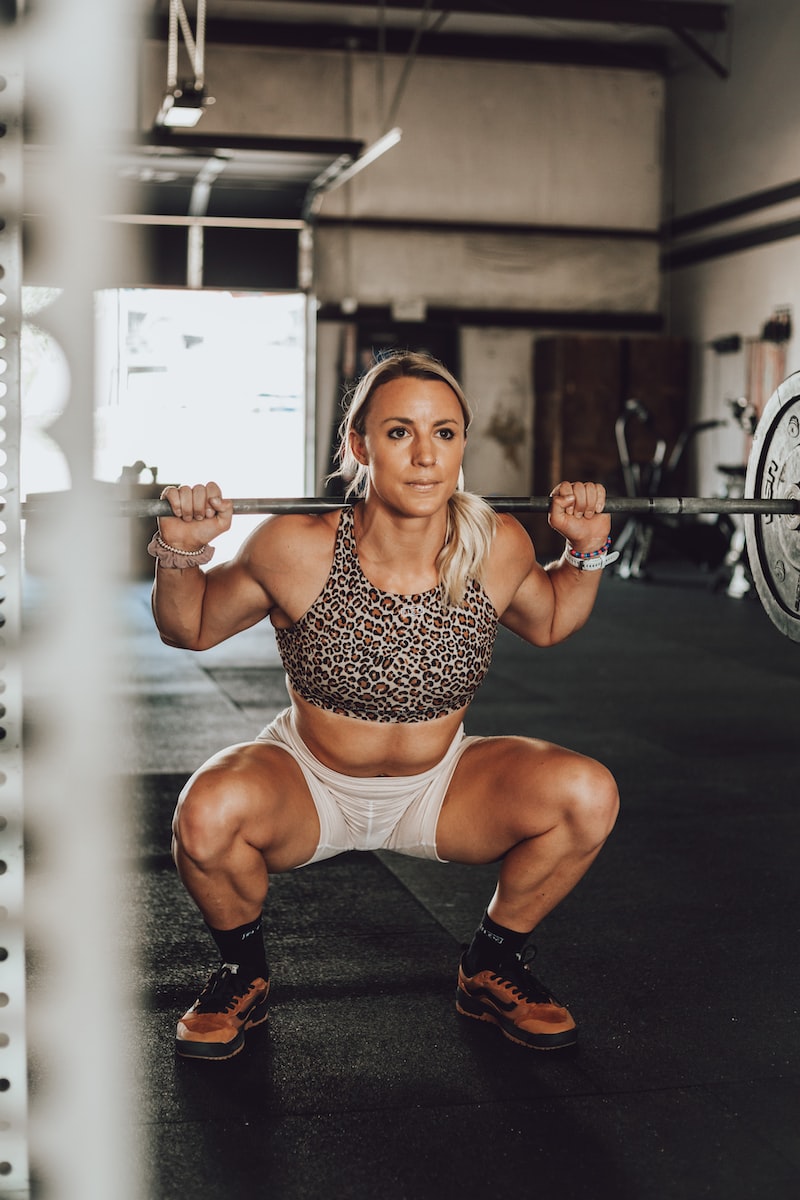
Many people perform the squat wrong. You’ll understand how to back squat after reading this article.
preparing to do the squat
The first section of this instruction manual will cover squat setup. I’ll go over how to hold the bar, how wide your hands should be, where your elbows should be, how to brace yourself, how to become tight, how to walk the bar out, and how to exert full-body stress.
bar placement
On the back squat, there are two standard bar positions: high bar and low bar. The bar sits on the traps during a high bar squat and the back delts during a low bar squat. Making sure that the bar is on the traps rather than the neck is the main thing to watch out for while positioning it for the high bar squat. Most of the time, folks who squat with a high bar end up with strained necks. Some folks feel the low bar squat on their shoulder blades. That typically results from placing the bar directly on the scapulae’s spine. The issue should be resolved by simply adjusting the scapula’s bar slightly up or down. The high bar position is preferable for people with shoulder issues who lack the mobility to hold the bar that low without experiencing pain. In comparison to the high bar squat, the low bar squat results in a little higher forward lean. As you position yourself, be sure to be in the center of the barbell. It will be challenging to keep your balance if the bar is placed asymmetrically on the back, causing one side to bear the majority of the weight.
Hand placement
Generally speaking, you should strive to bring your hands as close as they can go without hurting your wrists, shoulders, or elbows. Your upper back will stay tight if you use a thin grip.
Elbows
Keep your elbows tucked in and down by your sides. It ought to feel just like a lat pull-down. Your lats will tense up as a result, which will ease tightness in your upper back. When performing low bar squats, some people find it advantageous to drive their elbows up behind the bar. This is due to the fact that moving one’s elbows back expands the shelf on which the bar can be placed even if one doesn’t have extremely large rear delts.
tightening and bracing
It’s crucial to go tight, brace, and create full-body tension since doing so lowers your risk of injury and enables you to lift the most weight. It need more than just strong hips and legs to squat. The force must be able to move from your body into the bar. You should intentionally draw your shoulder blades together and keep doing so the entire time the bar is on your back to get your upper back taut. As previously said, unless you need to shove your elbows behind you, bring them down and in toward your body. You must take a deep breath into your diaphragm to create intraabdominal pressure prior to each rep. Your stomach should expand as you breathe into your diaphragm. Your lower back is protected as a result. You are not breathing into your diaphragm if your shoulders and chest rise when you inhale. At least until you are two-thirds of the way back up, you will hold this breath throughout the rep. As if you’re ready to take a punch to the gut, tighten your abdominal muscles. This will ensure that your core is braced, along with taking a deep breath.
Toes pointed out at an angle and in stance
Depending on their mobility and particular anatomy, people’s stance width varies. To find your optimal position, you’ll need to experiment. Your heels should be slightly pointed out and shoulder-width apart as a decent place to start. Check out how that feels. Then, try making it an inch or two broader and/or narrower. Try walking with your toes pointed out, your knees driven out, and your feet pointed straight ahead. With each stance width, test your comfort level and the depth of your squat without curving your back.
Pulling the bar by hand from the rack
To begin with, make sure the hooks are at a good height. The bar shouldn’t ever need to be carefully removed from the rack. This is a typical error that many individuals commit. Additionally, you don’t want it to be so low that you use excessive energy. Setting the hooks so the bar is level with your sternum is an excellent place to start. place your feet at the same width that you intend to squat. Get your hips beneath the bar and squat the weight up out of the hooks by starting them a little behind the bar, taking a deep breath into your stomach, tensing your back, and doing so. When unracking the bar, be forceful. Unrack the bar, then give the weights a moment to settle. Take a tiny step back with one foot, a tiny step back with the other foot, and then, if necessary, a third tiny step back. In order to spend as little energy as possible, you want the walkout to be as effective as possible. Never should leaving require more than three steps. Once you’ve walked the bar out, your upper body will already be stiff and braced. To ensure that you have perfect control of the bar, you should now tighten up even more. Make sure your big toe, small toe, and heel are all receiving an equal amount of weight. The next step is to tighten your hips. Try to turn your hips outward while keeping your feet firmly planted on the ground. To achieve this without actually moving your feet, visualize touching your heels together and extending additional toes in the direction of a wall on either side.
preparing to do the squat
1 Either place the bar on the rear delts or the traps. Make sure you are centered in the bar.
2 Grab the bar as tightly as you can bear. Move your hands out if you have any pain or discomfort in your wrists, elbows, or shoulders. If necessary, drive your elbows behind the bar or under it.
3 Before taking the bar off of the rack, take a deep breath, tense yourself, and brace. Utilizing as little energy as possible, walk the bar out.
4 the width of your chosen stance
5 Inhale once more deeply via your diaphragm. Create entire body tension by bracing as if you’re about to take a punch to the gut.
The Kneel
Look straight ahead or slightly downward while squatting. Don’t let your eyes wander; keep them fixed on anything. When performing the squat, two cues are to sit down and to sit back. You break at the hips and knees simultaneously as you sit down. By pushing your butt back as if you were going to sit on a chair, you cue to sit back by first breaking at the hips. Even if sitting down tends to keep your body more upright, the change isn’t really noticeable. It will be better to start with breaking at the hips and knees at the same time for the majority of folks. Try both, then choose the one that feels most comfortable. As quickly as you can descend while maintaining tightness and perfect control over the barbell is what you should aim for. Try to squat down to about parallel. Where the apex of the knee and the crease of the hip are parallel. Some people can descend further, while others would find it difficult to descend because of mobility problems. Drive your traps into the bar and push your feet into the ground as soon as you reach the bottom. Your shoulders and hips should rise at the same rate. By doing this, you can maintain a constant back angle during the lift. Allowing your hips to rise over your shoulders and becoming hunched over is a common mistake. That should not happen if you drive your traps into the bar.