


Do you feel like your life is stuck? Are there problems at work or at home that just won’t go away, no matter how thoroughly you consider them and attempt to fix them? Have you considered going to a Family Constellation?
The systemic approach to treating with individual concerns used in Family Constellations, created in the 1980s and 1990s by German philosopher and psychotherapist Bert Hellinger, can also be used in enterprises and organizations. People present the same kinds of problems to coaches, counselors, and psychotherapists as they do during Family Constellations workshops. Family Constellations takes into account concerns and obstacles, as well as hopes, desires, and aspirations, from a multigenerational viewpoint, which is the approach’s evident uniqueness. This piece makes use of our most fundamental feeling of group identification. This is our animal ancestry, and it is still with us in the form of an internal compass that alerts us when we belong to a group or system—or when our sense of belonging is challenged.
The method places a lot of emphasis on specific patterns that recur throughout family generations. Hellinger noted that groups or systems are governed by specific ordering forces. Love flows and members of the group, family, or system flourish when we are in harmony with these forces. One or more members of a system will typically experience suffering when we are out of sync with these forces, which are frequently referred to as “The orders of love.”
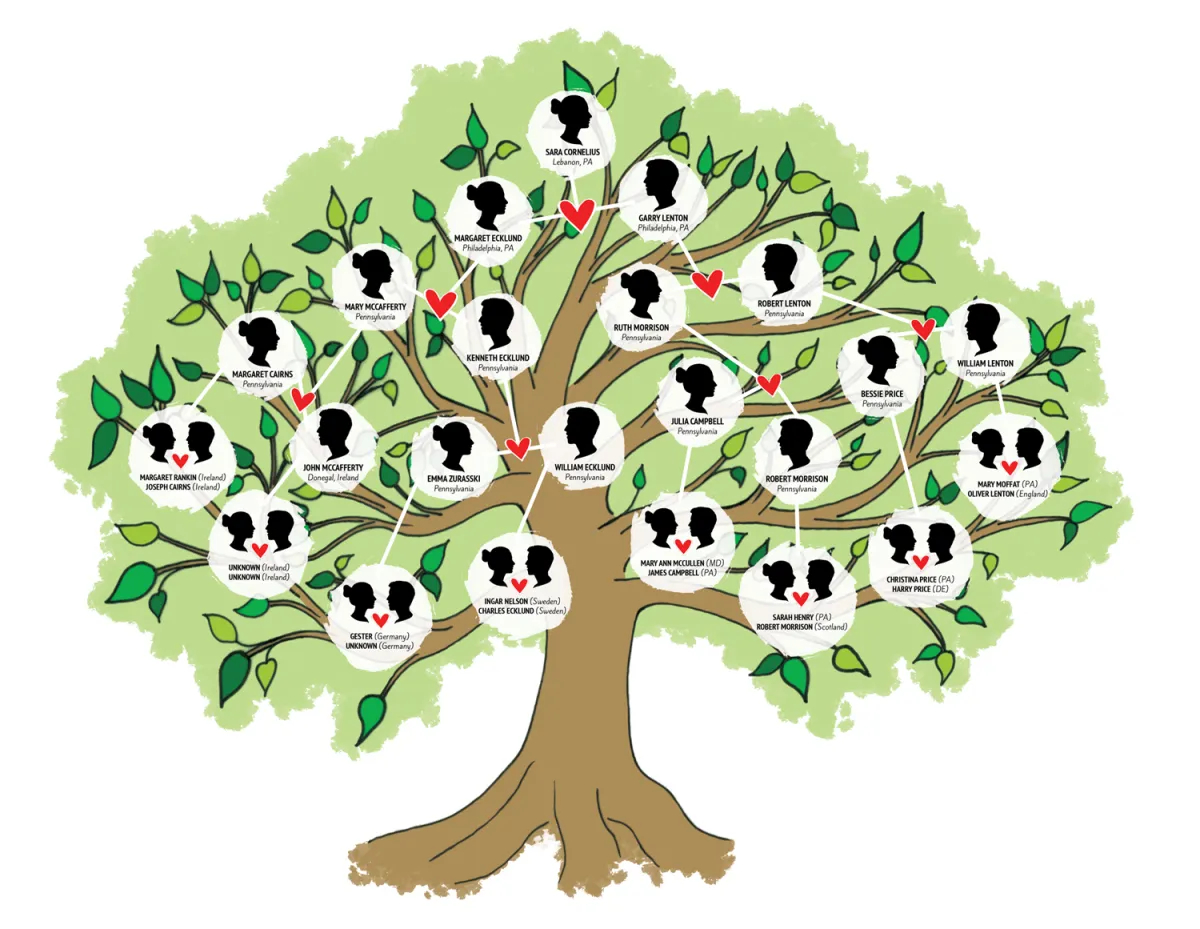
Family Constellations, which are short-term and solution-focused, produce a dynamic snapshot of the system to which we belong by shedding light on the connections between the many components of it. A system typically includes features that are both ancestral (trans-generational, familial) and sociological (cultural and historical), making them particular to each person or problem at hand. A map of the complete system can be created by considering the situations that influenced our parents, grandparents, and great grandparents (and consequently, us). From this vantage point, we are better able to see how things are or were, as well as how systemically connected we are to other individuals and events, including those that are part of larger familial, historical, and cultural occurrences. As time and space are compressed in front of us, this enables us to access the root of problems that appear to be insurmountable and opens up a new world of connections and opportunities.
How does a Family Constellation work?
Using group members who come to support the work or map out an issue of their own, a “living map” is constructed in regard to the issue under consideration in a group of between 8 and 16 individuals. A special pattern that compresses time and provides hints to the relational and spatial patterns of the system’s members is built up by using the group’s members to “stand in” as parents, grandparents, and events, providing a three-dimensional representation of the problem under examination. The actual people don’t have to be there—we can’t alter them, of course—but we can remember their unrealized potential and their spirit in a way that encourages the return of systemic balance and order. We may see the wider picture and a space for ourselves in it that is free from previous restrictions and unnecessary suffering by looking further back into the lives and circumstances of earlier generations.
Once the constellation is created, it can be’read’ under the direction of an experienced facilitator, allowing dynamics, entanglements, and loyalties that were previously concealed to be clearly visible. The method mostly relies on internal recollections, pictures, and tales of the people, places, and occasions that impacted our lives and the lives of the generations before us. Transgenerational attitudes, while genuinely caring and giving, are frequently found in the early stages of a constellation but are ultimately harmful. These attitudes frequently violate the governing systems’ organizing principles; for instance, shame and merit are only the property of those who have earned them and cannot be taken by others. One key element in Family Constellations is honoring individuals who have been excluded, disregarded, imprisoned, or not appropriately grieved as well as returning blame to those who it rightfully belongs to. To untangle ties to earlier generations, the facilitator uses a variety of ceremonies, rearranging the Constellation’s spatial configuration, and healing phrases. I’ll follow you, I’ll go in your place, and “Rather me than you” are instances of phrases that show how blind love ensnares us. Instead of leaving difficult fates with those to whom they belong, resolutions like “I see your burden and I honor it” or “With respect I’ll leave it with you” help the process of disentangling identifications by bringing the Constellation’s and the issue holder’s orientation to the present and future instead of the past.
In a metaphorical sense, homeopathy is more like surgery than family constellations. Most constellations naturally display vital traits like gratitude, modesty, and peace. Instead of relying solely on cognitive discoveries, it is a compassionate, soulful approach that produces living experiences of something new. Any Family Constellation intervention that is effective will be pertinent, empowering, and long-lasting. The method helps us to live effectively under systemic constraints rather than being about individual transformation.
Who Attends a Workshop on Living Maps?
No matter your level of Systemic coaching expertise, workshops are for you. Personal concerns including marital problems, addictions, mood and behavior problems, eating disorders, and family rifts can all be resolved deeply with this approach, among other things. Additionally, it works well in shedding light on potential futures, structures, or corporate ventures. Others may show up in addition to those bringing a topic to be supported or represented. To support therapeutic treatment, counselors and therapists may accompany their clients. To learn more about the advantages of this holistic approach, others in the helping professions are welcome to attend as well.