


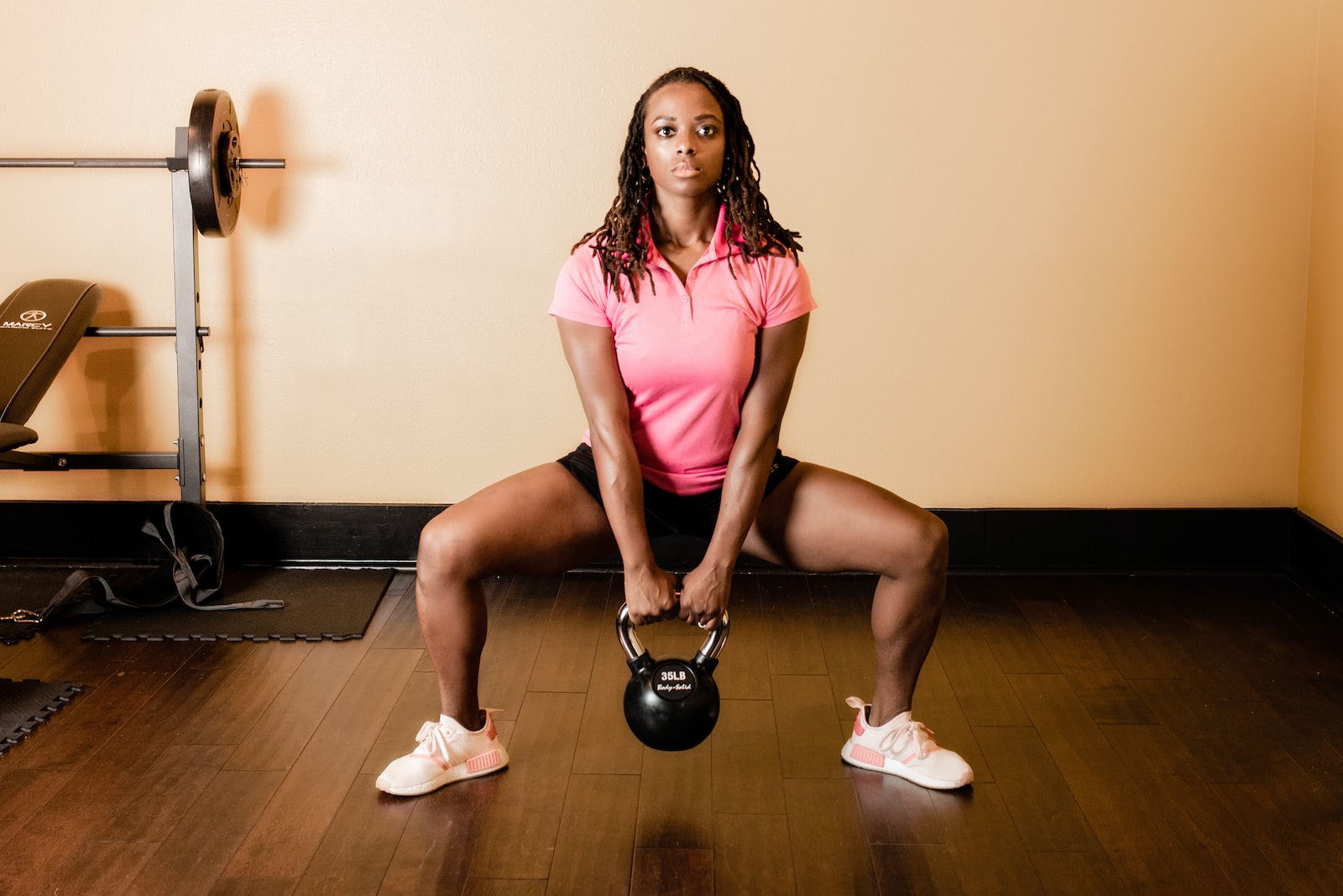
I’ve tried training twice a week several times, and I’ve always been successful. Many people approach training with an all-or-nothing mentality. Many people either stop exercising altogether due to their hectic schedules or think that they must spend a lot of time in the gym in order to see any effects. Everyone can make time for two gym sessions a week if it’s a priority for them, therefore they would be better off sticking to two days.
I started strength training in my first year and saw good results with just two sessions per week. After that year, I acquired 12 kg of body weight and could deadlift 180 kg with ease. Since then, I’ve experienced a number of brief but fruitful periods of twice-weekly training. A number of my clients only work out twice a week, yet they are all progressing well.
For whom might this be a wise decision?
someone who struggles to frequent the gym more frequently due to a hectic schedule. #
Someone who merely wants to be in shape but doesn’t want to visit the gym more frequently.
For those who play sports, have other training obligations that take precedence, and only strength train to help them perform better in their sport. As a result, they are unable to spend a lot of time lifting weights.
a person with recovery problems.
Those who have struggled to maintain a regimen.
During a brief period when life is chaotic. Consistently carrying out this action over an extended period of time is the key to progress. I can always train two days a week and progress no matter how busy my life is. then I can train
If someone can do it four times a week and is improving, I’m not expecting them to change their routine in response to this piece. This is a wise choice for
How was my training organized?
There were two ways that my help functioned.
Choice 1
Bench press, squats, and lower assistance exercises
B – Bench press, deadlift, and upper body support exercises
Choice 2
Bench press, 3/4 assistance reps, and the squat
Exercises B: Deadlift, Overhead Press, and 3/4 Assistance
You can employ a variety of key exercises. I occasionally performed dips, overhead presses, and trap bar deadlifts.
principal job progression
I would choose a rep range, such as 10 to 5, for each exercise. To a top set of 10, progress. You’ll increase the weight in each session until you can only complete 5 solid reps. The cycle will then begin anew with a weight that allows you to complete 8 repetitions. This weight ought to be higher than what you began the previous cycle with.
I also employ several rep ranges, such as 14-8 reps, 12-8 repetitions, 10-6 reps, and 12-3 reps, etc.
An illustration of what it might like
Week 1 100 kg times 10
Week 2: 102.5kg times 10.
Week 3 105 kg times 10
4th week 107.5g x 9
Week 5 110 kg times 8
Week 6: 8 x 112.5 kg
Week 7: 8 of 115 kg
Week 8 117.5 x 7
Week 9: 6 x 120 kg
10th week 122.5kg x 6
Week 11: 5×125 kg
Week 12 110 kg times 10 ( The start of a new cycle)
After the top set, you should perform 2-4 back off sets with 80% of the weight you used for the top set for the same number of reps on the squat and deadlift. The bar speed should be quick throughout each rep of these sets, but not to the absolute maximum.
So it can appear like this.
200kg x 9
160kg 3 x 9
I personally make good improvement even without back off sets, but not everyone does.
You will use 90% of the top sets for the bench press, overhead press, and dips (if used as one of the major movements) and perform 2-4 back off sets for the same number of reps as the top set.
So it would appear as follows.
100kg x 12
90kg 3 x 12
You would perform assistance exercises for 2-5 sets of 8–15 repetitions. In a workout, I’d perform three or four assistance exercises. To ensure that the workout didn’t last too long, rest intervals were frequently performed as supersets and kept reasonably brief.
The 350 method that I learned from Paul Carter is another way I like to perform support workouts. You perform 3 sets of as many reps as you can using this technique, pausing for 2 minutes in between each set. 50 reps total across the three sets are the goal. You can increase the weight the next time once you’ve completed 50 repetitions.
100kg x 17
2 minutes of rest
100kg x 13
2 minutes of rest
100kg x 8
I would continue using the same weight until I completed 50 total reps after completing 38 repetitions.
Exercises that assist the upper body
the upper back (chin-ups, pull up, machine row seal row, t-bar row, dumbbell row, lat pull down etc)
Dips
bench press with a close grip
-Bench press with dumbbells
Curls
Exercises that help the lower body
variant of the squat
lift your glutes
Greek deadlift
Leg lift
Basic work (rollouts, side bends, hyperextensions etc)
Exercises for support in Option 2
The support exercises would typically consist of
two pull-up workouts for the upper body
1 exercise for the upper body pushing
1 lower-body workout
What might a week of strength training look like?
Option 1 would prefer that,
Exercise A (squat, bench press and lower body work)
Squats
20kg x 10, 60 kg times 8, 80 kg times 5, 120 kg times 5, 140 kg times 5
170kg x 8
135kg x 3 x 9
exercise bench
20kg x 10, 80 kg x 5, 40 kg x 5, 60 kg x 5,
100kg x 8
90kg 3 x 8
85kg x 10
RDL-350 technique
3×12 glute ham raises
Three sets of wheel rollouts
200 face pulls performed in between sets of other exercise
Exercise B (trap bar deadlift and press and upper body workout)
squat with a trap bar (our trap bar weighs 32kg)
72kg x 10, 112 kg x 5, 92 kg x 5, 142 kg x 5, 162 kg x 3, 182 kg x 3, and 202 kg x 1
212kg x 8
172kg x 2 x 8
Press
20kg x 10, 30, 40, and 50 kilograms times five.
65 x 8
60kg x 9
55kg x 4 x 9
3 sets of 12 close-grip bench presses
6 x 15 seal rows
3×12 lat pulldowns
Curls: Rest for 15 seconds in between each set of three.
Performing 200 face pulls in between sets of other exercises
This is how option 2 would seem.
Exercise A (squat, bench press and assistance)
Squats
20kg x 10, 60 kg times 8, 80 kg times 5, 120 kg times 5, 140 kg times 5
170kg x 8
135kg x 3 x 9
exercise bench
20kg x 10, 80 kg x 5, 40 kg x 5, 60 kg x 5,
100 x 8
90kg 4 x 8
Dips 4 x 12
4 x 10 chin-ups
rows 4 x 10 sealed
4 sets of glute ham raises
Exercise B (trap bar deadlift and press)
squat with a trap bar (our trap bar weighs 32kg)
72kg x 10, 112 kg x 5, 92 kg x 5, 142 kg x 5, 162 kg x 3, 182 kg x 3, and 202 kg x 1
212kg x 8
172kg x 2 x 8
Press
20kg x 10, 30, 40, and 50 kilograms times five.
65kg x 8
60kg x 9
55kg x 4 x 9
4 x 10 Romanian deadlift
4 sets of 10 close-grip bench presses
4 x 12 dumbbell rows
4 x 15 lat pulldowns
What advantages did training twice a week provide?
The main one was how simple it was for me to incorporate my workouts into my schedule even though I had a lot going on. I made an effort to maintain the same training days, which were evenly spaced out (Sunday and Wednesday), but with only two sessions to squeeze in, I was able to be flexible without it being problematic. Everyone can find time for two workouts a week, therefore it does eliminate the justification for not training.
My motivation increased, I noticed. I was enthused about training and eager to go for a PR. I looked forward to every workout. I couldn’t wait to hit the gym and reintroduce the fun to working out. Since I began training twice a week, I haven’t had a negative workout because I always feel rested, energized, and enthusiastic before a workout.
It will probably be simpler for you to recuperate from this than if you were training four or more times per week if you’re under stress or getting little sleep. After doing this, my joints felt fantastic.
If working on your strength and muscle development is not your first focus, it will free up more time for aerobic and mobility exercises. I had a little more time, so while watching TV at home, I did some essential mobility exercises. In his publications, Jim Wendler uses a template he calls 2x2x2. You perform two strength exercises, two mobility exercises, and two conditioning/cardio exercises with this. You could train in a balanced manner by doing this.
What are the primary drawbacks of merely two workouts each week?
You can only accomplish so much in only two workouts. It can be challenging to get a lot of volume in and you can’t devote as much time to working on your weak regions.
The workouts must be really challenging, and I frequently had to push myself to the point of exhaustion while packing a lot into each session. This was challenging mentally.
Being a personal trainer can be extremely stressful because you sometimes see clients entirely abandon their hard work by quitting their workouts or taking lengthy breaks, which leaves them just trying to get back to where they were before. Instead of training four times a week and stopping when life gets busy, I’d prefer they trained twice a week consistently for a very long time. Or you could just maintain two days a week as a temporary fallback for when things become hectic.
You might be surprised by what you can do with such little effort. It’s unquestionably preferable than giving up and then having to start over.